Classic Pavlova
The dessert that closes a Kiwi summer gathering: a meringue with a crisp, papery shell and a soft marshmallow centre, crowned with whipped cream and whatever fruit is in season.
How this was made: Recipes are developed and kitchen-tested by our editorial team. We use AI tools to assist with drafting, structuring and proof-reading; a human editor reviews and tests every recipe before publication. No fictional author is used.
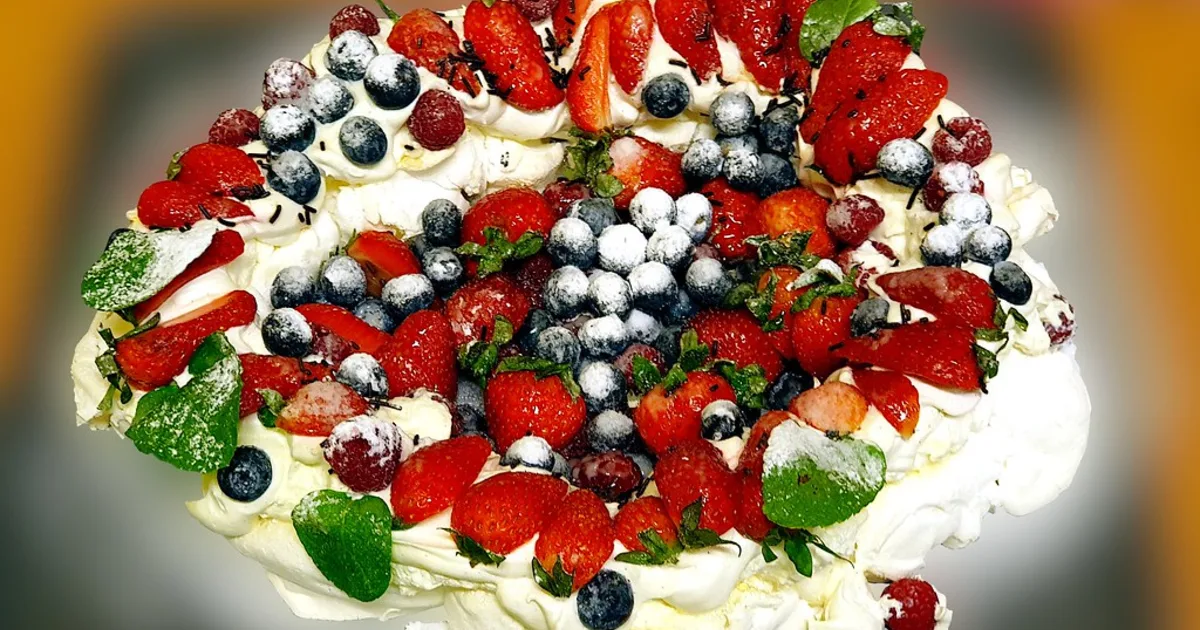
A pavlova is mostly egg whites, sugar and patience. The reward is a dessert that feels generous and looks like a centrepiece while costing very little. The crisp outer shell gives way to a centre that stays soft and slightly chewy, like a marshmallow, and the contrast with cool cream and sharp fruit is the whole point.
The science is simpler than it looks. Sugar stabilises the whipped whites and gives the shell its crackly finish; a little cornflour keeps the inside soft; and a splash of vinegar helps the structure hold. A slow bake at a low temperature dries the meringue without colouring it, and leaving it to cool in the turned-off oven is what prevents the dreaded crack and collapse.
Ingredients
Meringue
- 4 egg whites, at room temperature
- 1 1/4 cups caster sugar
- 1 tsp white vinegar
- 1 tsp cornflour
- 1 tsp vanilla extract
To serve
- 300 ml cream, whipped to soft peaks
- 2 cups seasonal fruit (kiwifruit, berries or passionfruit)
Method
- Heat the oven and mark the tray. Set the oven to 150°C (fan 130°C). Line a baking tray with paper and draw a 22 cm circle on it as a guide, then turn the paper pencil-side down.
- Whip the whites. Beat the egg whites in a clean, dry bowl until they hold soft peaks. Any trace of grease or yolk will stop them whipping, so start with a spotless bowl.
- Add the sugar slowly. With the beaters running, add the caster sugar a spoonful at a time. Keep beating until the mixture is thick, glossy and stiff, and the sugar has fully dissolved. Rub a little between your fingers; if it feels gritty, keep going.
- Fold in the rest. Gently fold through the vinegar, cornflour and vanilla until just combined. Do not overwork it.
- Shape and bake. Spoon the meringue onto the circle and shape it into a round with slightly raised sides. Put it in the oven, immediately reduce the temperature to 120°C (fan 100°C), and bake for 75 minutes without opening the door.
- Cool, then top. Turn off the oven and leave the pavlova inside to cool completely, ideally with the door ajar. Just before serving, top with whipped cream and seasonal fruit.
- Room-temperature whites whip to a greater volume than cold ones, so take the eggs out ahead of time.
- Cooling the pavlova slowly in the oven is the single best defence against cracking and sinking.
- Bake the shell up to a day ahead and store it airtight, but only add cream and fruit just before serving or the shell softens.
- Kiwifruit, strawberries and passionfruit each cut the sweetness with acidity; combine two or three for contrast.
Sources & references
Background reading used while developing and verifying this recipe. Quantities and timings were confirmed by our own kitchen testing.
- Edmonds Cookery Book, desserts and meringues section, for traditional New Zealand pavlova ratios.
- General food-science references on the role of sugar, cornflour and acid in meringue structure.
- New Zealand food-safety guidance on storing and serving cream-topped desserts.